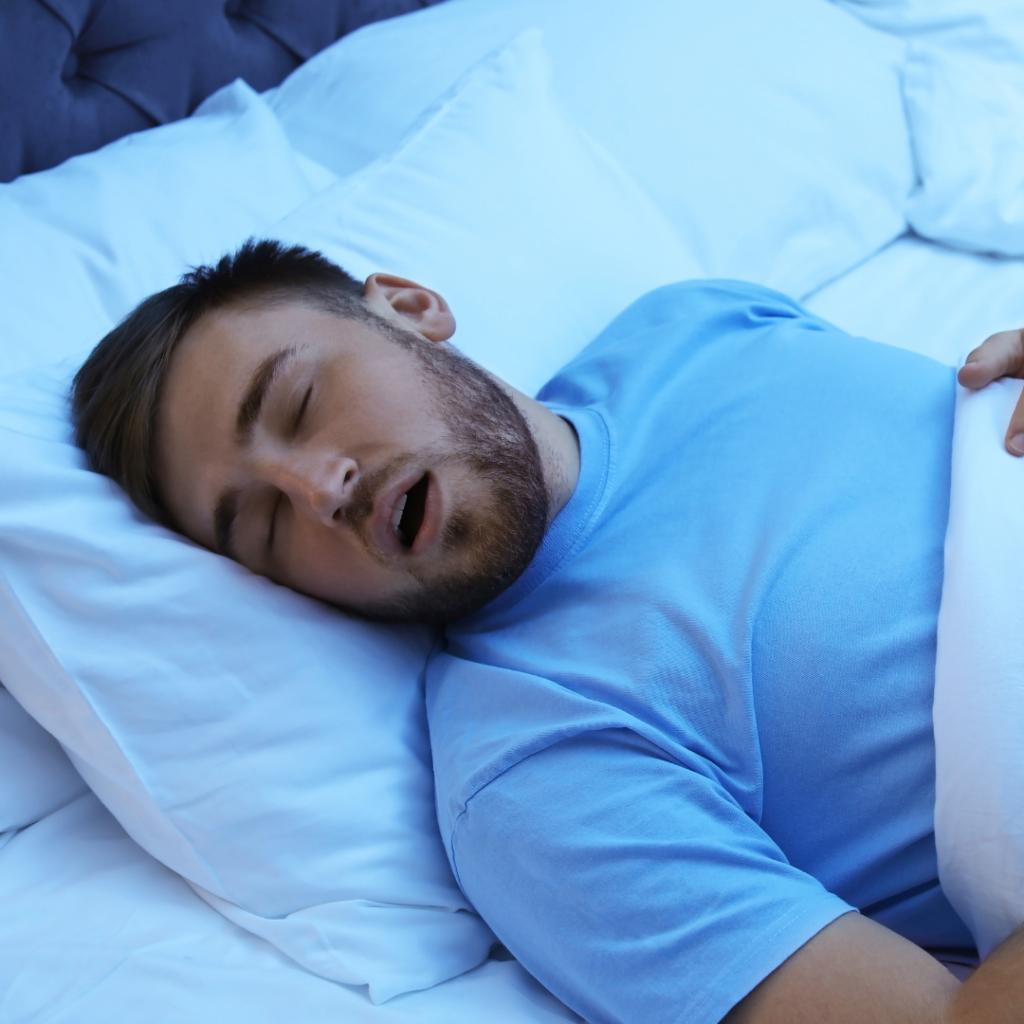

Obstructive sleep apnea (OSA) is a serious sleep disorder in which the relaxed muscles of the airway collapse (or partially collapse) during sleep, blocking or limiting the flow of air to the lungs.
The harder the person tries to breath through this restricted airway, the tighter the airway closes.
Due to the ensuing struggle to breath, eventually the sleeping person will rouse from a deeper level of sleep to a lighter level of sleep as they try to open their airway by repositioning their jaw and tongue —- usually with a gasp or snort.
The whole process starts over again and can occur hundreds of times per night! This is what is referred to as fragmented sleep and prevents the OSA sufferer from getting restful, healthy, rejuvenating sleep.
Types of Apnea
Hypopnea (or Hypo-apnea)
Hypopnea is an overly shallow or abnormally low respiratory rate resulting in a 30% decrease of airflow into the lungs. This in turn will cause a reduction in the amount of oxygen transferred into the blood (low blood oxygen saturation). It is commonly due to partial obstruction of the upper airway.
Numerous researchers have discovered hypopneas to have a “similar if not indistinguishable impact” on the negative outcomes of sleep breathing disorders.
Obstructive Apnea
Obstructive Apnea is a temporary cessation of breathing due to the complete collapse of the upper airway. This apneic event results in a 90% decrease in airflow, similar to choking. Once again, this decreased airflow will cause a reduction in blood oxygen saturation of 3% or greater.
Most individuals with obstructive sleep apnea are unaware of disturbances in breathing while sleeping, even after awakening. Symptoms may be present for years or even decades without identification, during which time the person may become conditioned to the daytime sleepiness, headaches and fatigue due to significant levels of sleep disturbance, referred to as fragmented sleep.
Central Apnea
Unlike Obstructive Sleep Apnea, which is caused by structural changes within the airway, Central Sleep Apnea (CSA) stems from a neurological malfunction. This results in the brain’s inability to send a signal to the muscles that are involved in the process of breathing, primarily the diaphragm.
People with central sleep apnea often experience repeated episodes in which their breathing stops and restarts. People with CSA are less likely to report loud snoring. The two most common complaints of people with this form of sleep apnea are that they wake up in the middle of the night feeling as though they can’t catch their breath, resulting in significant daytime fatigue.
Complex or Mixed Apnea
Complex sleep apnea (CompSA) is a condition that develops during the use of CPAP to treat obstructive sleep apnea. It is a combination of obstructive sleep apnea and central sleep apnea. It is identified by the persistence or emergence of central apneas upon exposure to CPAP when obstructive events have been therapeutically mitigated. Complex sleep apnea resolves over time in the majority of people, but the condition persists in about 1.5% of people.
The Dangers of Untreated Sleep Apnea:
Left untreated, sleep apnea can lead to serious and sometimes life-threatening health complications:
High Blood Pressure
- Breathing interruptions trigger the release of cortisol – a stress hormone
- Leads to vasoconstriction of arteries causing an increase in blood pressure
- Creates ongoing stress on your cardiovascular system
Heart Disease and Stroke
- Disrupted blood flow, due to vasoconstriction, increases risk of heart attack
- Increased stress on the heart occurs on a regular nightly basis
- Makes existing heart conditions more dangerous
- Higher stroke risk for individuals suffering from obstructive sleep apnea
Type 2 Diabetes
- Research supports a link between Type 2 Diabetes and Sleep Apnea
Weight Gain
Disrupted sleep causes hormone imbalance that can lead to:
- Increased appetite
- Lower metabolism
- Less energy to exercise
- Irritability
Risk of Fatal Accidents
Because people with obstructive sleep apnea (OSA) may experience extreme fatigue. This impact cognitive and/or reflexive capabilities dramatically increasing the risk of:
- Car accidents
- Workplace accidents
- Other potentially fatal incidents

Photo by Alexandra Gorn on Unsplash
The Connection Between Sleep and Overall Health:
We often focus on diet and exercise as the pillars of good health, but quality sleep is equally vital. In fact, sleep is the foundation of our overall well-being.
The Stages of Restorative Sleep
It’s not just the number of hours we spend sleeping that matters – it’s the quality of that sleep. Our bodies and brains require specific sleep stages to function properly, similar to how a computer needs regular reboots and defragmentation.
During deep, uninterrupted sleep cycles, our bodies produce crucial hormones that:
- Support metabolism
- Facilitate physical repair and recovery
- Regulate vital bodily functions
- When sleep is fragmented by conditions like sleep apnea, our brain and body miss out on this essential restorative process.
Other Benefits of Quality Sleep
Beyond the impacts of sleep disorders, prioritizing quality sleep provides additional wide-ranging benefits. Our bodies release other essential hormones during deep sleep that:
- Further support tissue repair and regeneration
- Restore brain function and cognitive performance
The Interconnected Picture of Health
Prioritizing quality sleep is just as important as maintaining a balanced diet and active lifestyle. It’s all part of the interconnected picture of total health and wellness.
Ready to take the next step?
Try our Sleep Health Quiz or talk to the team at Teton Sleep Solutions about sleep solutions to help you get the rest you need.